


Blog
Sun-Protective Clothing for Kids: A Practical Parent Guide

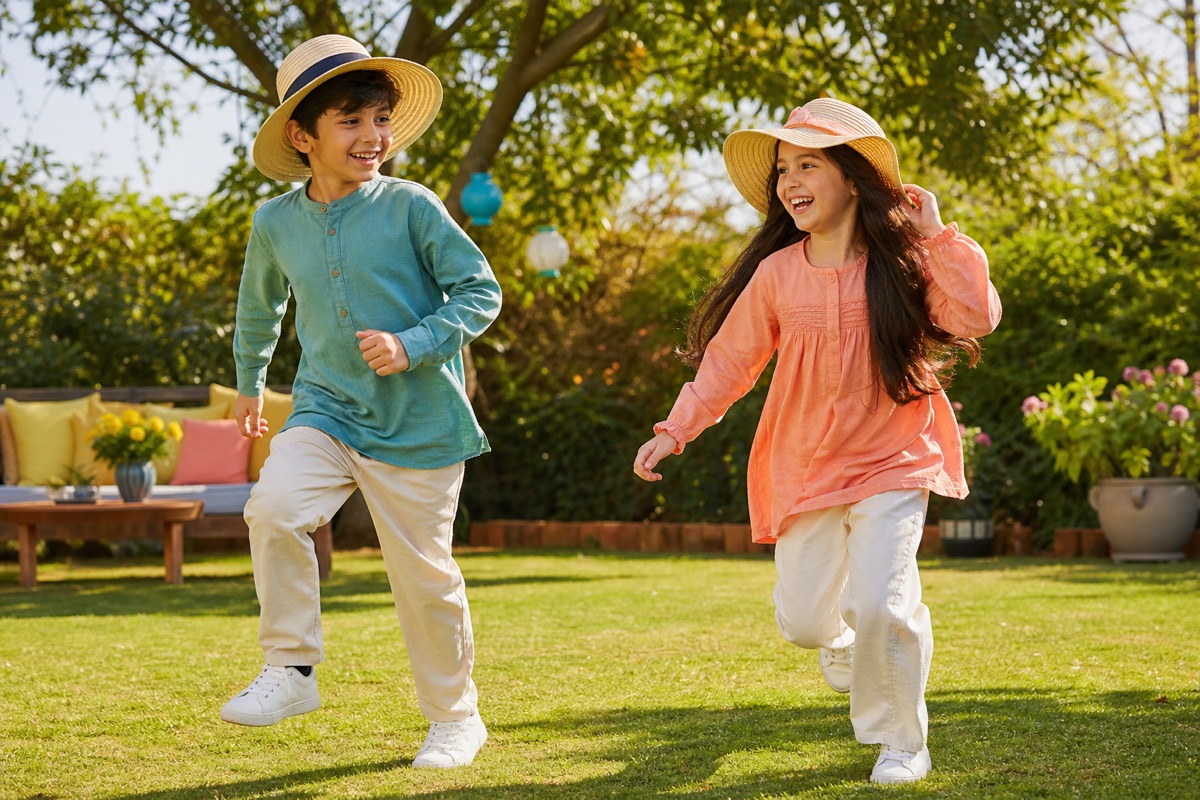
Sun-protective clothing for kids adds a dependable physical layer between skin and ultraviolet radiation. In Pakistan’s bright, hot weather, the goal is balanced protection: cover more skin with a suitable fabric and hat while keeping the child comfortable, hydrated and able to cool down.
Clothing is one part of sun safety. Follow local health guidance and ask a qualified clinician about sunscreen or heat concerns for your child.
Cover the skin with lightweight layers
Choose a breathable long-sleeved top and trousers that cover the legs without restricting movement. The U.S. Centers for Disease Control and Prevention recommends shade plus clothing that covers arms and legs; its sun-safety guidance also explains why protection matters even when a child is in the shade.
A loose, comfortable fit helps air circulate. Very tight fabric stretches and may provide less reliable coverage, while heavy layered clothing can trap heat. Check the child’s comfort frequently.
Choose a dense, intact fabric
Hold an ordinary garment up to a bright indoor light. If you can easily see through an open weave, it is unlikely to provide as much coverage as a denser fabric. Look for a close weave, intact fibres and enough thickness for the planned activity. Worn, thinning or overstretched areas deserve replacement.
Colour and fibre can influence protection, but no single material is automatically best. Construction, weave, stretch, moisture and treatments all matter. Prioritize a garment your child can wear comfortably for the whole outing.
Understand UPF labels
UPF stands for ultraviolet protection factor. It is a garment rating, not the same measurement used for sunscreen. When buying UPF-rated clothing, read the manufacturer’s rating, coverage and care instructions rather than assuming all “sun shirts” perform equally. Repeated wear, stretching and incorrect care may affect a garment, so replace it when the fabric becomes thin or damaged.
Use a hat that shades more than the face
A broad-brimmed hat can shade the face, ears and back of the neck. A cap with only a front peak leaves more areas exposed, although it is still better than no hat when combined with other protection. Choose a secure, comfortable fit without a long loose neck cord. Remove hats if they interfere with play equipment or the child overheats.
Plan around Pakistan’s heat
Protective clothing should not make a child uncomfortably hot. Prefer lightweight garments, seek shade, schedule active play for cooler parts of the day where possible and build in water and rest breaks. Move indoors or to a cooler area if a child becomes unusually tired, dizzy, confused, nauseated, very hot or otherwise unwell, and seek appropriate medical help.
Remember exposed areas
Clothing does not cover every part of the body. Hands, face, lips, ankles and feet may still be exposed depending on the outfit. Use shade and follow age-appropriate public-health advice for sunscreen and eye protection. For babies, prioritize shade and protective clothing and obtain clinician guidance for additional products.
Dress for water and active play
Wet fabric may cling, stretch or become more transparent. Pack a dry change of clothes and do not rely on a thin wet T-shirt as the only protection. For running and sports, select smooth seams, a flexible fit and moisture-managing fabric. Reapply the broader sun-safety plan after swimming, sweating or changing clothes.
A simple outfit formula
- lightweight long-sleeved top;
- comfortable full-length trousers;
- broad-brimmed hat;
- covered shoes when suitable for the activity;
- shade, water and rest breaks; and
- age-appropriate protection for exposed skin and eyes.
For everyday hot-weather fabrics and outfit planning, pair this checklist with our kids’ summer clothing guide for Pakistan.
How to shop for sun-conscious kidswear
- Check how much skin the outfit covers.
- Examine the weave and look for thin areas.
- Ask the child to reach, sit and run to test comfort.
- Read any UPF claim and its care directions.
- Avoid long cords and dangling decorations.
- Choose pieces that combine easily so they will be worn often.
Frequently asked questions
Is any long-sleeved shirt sun protective?
It provides some physical coverage, but protection varies with weave, colour, stretch, wetness and condition. A tested UPF garment gives more specific performance information.
Can my child wear dark colours in hot weather?
Colour is only one factor. Balance coverage with fabric weight, airflow, shade and the child’s comfort. A lightweight, loose garment is often more wearable than a heavy layer.
Do clothes replace sunscreen?
Not for skin they do not cover. Use clothing as one part of a broader plan that includes shade and age-appropriate protection for exposed areas.
When should a sun shirt be replaced?
Replace it when it no longer fits, the fabric is thinning or damaged, or the manufacturer’s care guidance says its protective treatment has reached its useful limit.
Browse comfortable layers in the WonderKids collection and choose coverage the child will happily keep on.

