


Blog
Clothing Care Symbols: A Simple Guide for Parents

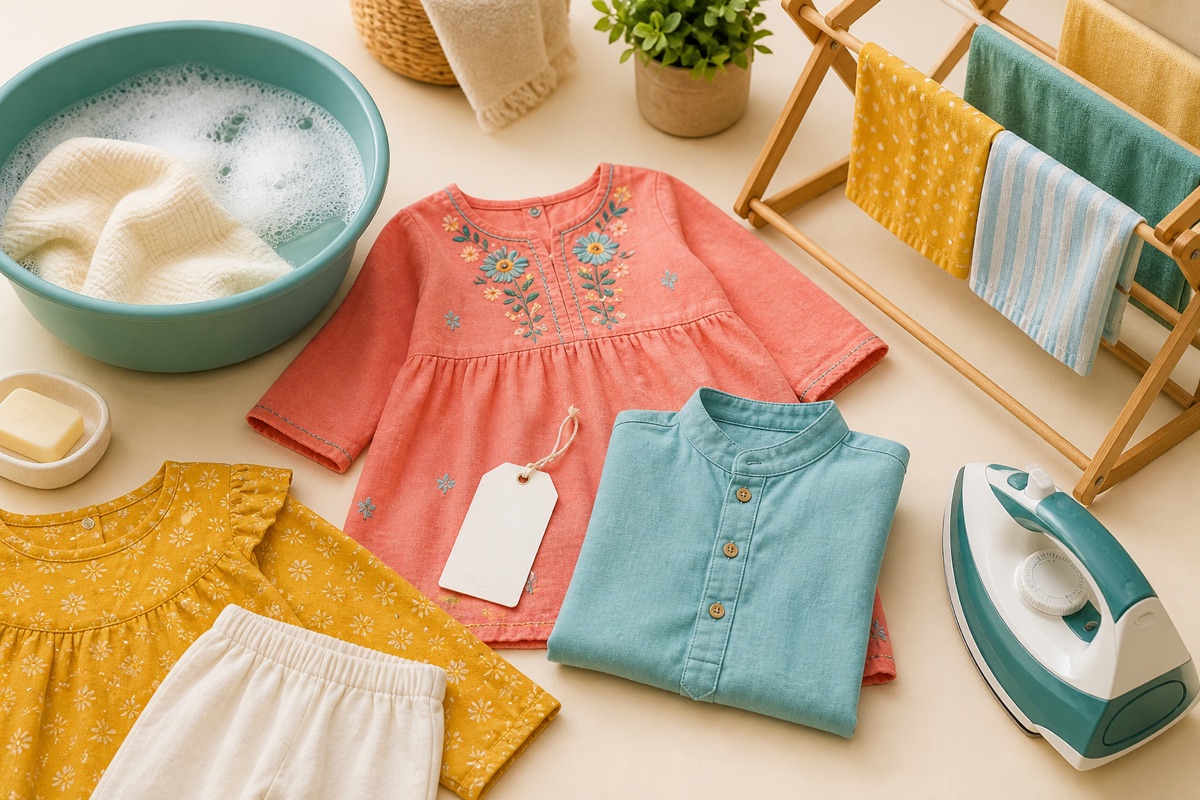
Clothing care symbols are a compact set of instructions for washing, bleaching, drying, ironing and professional cleaning. Reading them before the first wash helps parents prevent shrinkage, fading, damaged elastic and ruined decoration—especially on children’s clothes that are washed often.
Read the symbols in their standard order
International care labels commonly present five groups: a wash tub, triangle, square, iron and circle. GINETEX, the organization behind the internationally used system reflected in ISO 3758, provides an official care-symbol overview. A label may not show every possible symbol, so read the complete label and any written instructions.
Wash tub: how to wash
The wash-tub symbol tells you whether domestic washing is allowed. A number inside the tub is the maximum wash temperature in degrees Celsius, not a required temperature. A hand in the tub calls for hand washing. One line beneath the tub means a milder cycle; two lines mean a very mild cycle. A crossed-out tub means the item should not be washed in water.
For everyday kidswear, a cooler suitable cycle can reduce colour loss and energy use, but hygiene needs and the garment label still come first. Do not choose a hotter cycle than the label permits.
Triangle: whether bleach is allowed
The triangle controls bleaching. An empty triangle permits bleach under the standardized system; a triangle with diagonal lines limits treatment to non-chlorine oxygen bleach; a crossed-out triangle means do not bleach. Because products differ, match the garment instruction with the bleach label and never mix bleach with other cleaners.
Square: how to dry
The square represents drying. A circle inside the square refers to tumble drying, and dots indicate the permitted heat level. A crossed-out tumble-dry symbol means keep the garment out of the dryer. Other line arrangements inside the square describe natural drying methods such as line drying, drip drying or drying flat.
Reshape knitwear before drying and support heavy wet garments so they do not stretch. Bright prints and dark colours may last longer when dried away from strong direct sun, provided the label allows the chosen method.
Iron: safe pressing temperature
Dots inside the iron indicate temperature ranges: fewer dots mean lower heat. A crossed-out iron means do not iron. Some labels also warn against steam. Turn prints, embroidery and delicate trims inside out and use a pressing cloth when appropriate. Always start cooler; excess heat can melt synthetic fibres or mark decoration before you have time to react.
Circle: professional textile care
The circle is mainly for professional cleaners. Letters and bars tell a cleaner which process and level of mechanical action are suitable. Parents do not need to decode every professional variation; show the whole label to a reputable cleaner and mention any known stains. A crossed-out circle means the specified professional dry-cleaning process is not allowed.
Three marks that modify a symbol
- A cross generally means do not use that process.
- Dots indicate heat or temperature intensity for drying and ironing.
- Bars underneath call for gentler mechanical treatment.
Do not assume the meaning of an unfamiliar icon from its shape alone. Photograph the label and compare it with an authoritative chart.
Build a simple family laundry routine
- Check new garments before removing packaging or tags.
- Sort lights, darks, delicate items and heavily soiled clothes.
- Close zips and hook-and-loop fasteners so they do not snag other pieces.
- Turn printed and embellished garments inside out.
- Empty pockets and inspect loose buttons or trims.
- Use the mildest cycle that meets the label and cleaning need.
- Check stains before drying.
For treatment advice before washing, use our guide on how to remove stains from kids’ clothes safely.
When the label has faded or been removed
Look for product-care details on the retailer’s page or ask the manufacturer. If that is not possible, identify the fabric and decoration, test an unseen area and choose a conservative method such as cool gentle washing and air drying. Valuable, structured or highly decorated garments are better assessed by a professional cleaner.
Care decisions for common children’s garments
Cotton T-shirts, denim, knitwear, formal embroidered pieces and synthetic sportswear may require different cycles even when they share a colour. Fabric blends behave according to all their components, while elastic, prints and trims may be the most heat-sensitive part. Learn more in our parent guide to children’s clothing fabrics.
Frequently asked questions
Does 40°C mean I must wash at 40°C?
No. It indicates the maximum wash temperature under the symbol system. A lower suitable temperature may be used when it meets the garment’s cleaning needs.
Can I tumble dry when there is no drying symbol?
Do not guess. Read any written directions and check the manufacturer’s guidance; the washing and ironing instructions may also signal that gentle handling is needed.
Should I cut out an itchy care label?
If it is causing discomfort, photograph both sides first and store the image with the garment name or order record. Remove it carefully without cutting the seam or fabric.
A one-minute label check protects fit, colour and comfort—and helps every well-chosen outfit stay in use longer.

