


Blog
Kids’ Summer Clothes in Pakistan: 9 Comfort-First Tips

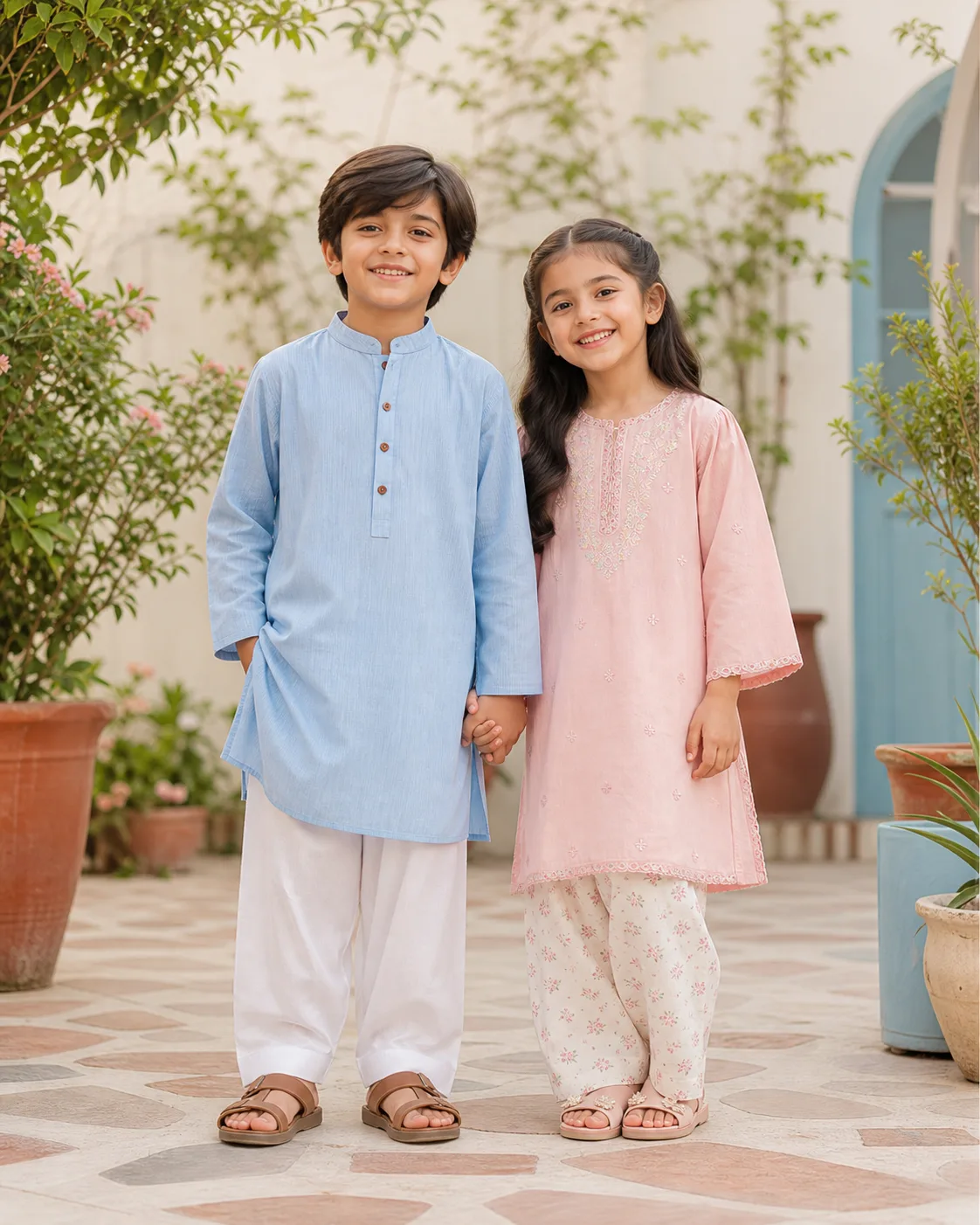
Kids summer clothes in Pakistan need to do more than look cheerful. They should help a child move, sit, nap, play and travel comfortably through warm days. The most useful summer wardrobe is usually not the biggest one; it is the one built from breathable-feeling fabrics, easy fits and pieces that work together.
Use these nine practical checks when you are choosing warm-weather outfits for babies, toddlers or older children.
1. Start with a loose, comfortable fit
A summer outfit should not pull across the shoulders, pinch at the waistband or restrict a child’s stride. Ask the child to raise both arms, sit, bend and take a few steps. If the garment rides up sharply, leaves deep marks or needs constant adjustment, try another size or cut.
Loose does not have to mean oversized. Very long hems and sleeves can get in the way. Aim for enough ease to move comfortably, with lengths that suit the child’s height.
2. Choose fabrics by feel and construction
Soft cotton is a familiar summer choice, but the fibre name is only part of the story. A light, open construction can feel very different from a heavy, densely finished fabric. Feel the inside as well as the outside. Check whether embroidery, appliqué or a stiff lining touches the skin.
Cotton blends and lightweight knits can also be useful when they offer easier movement or faster everyday care. Our guide to the best fabric for kids’ clothes explains how to compare common options without treating one fabric as perfect for every situation.
3. Keep the first layer simple
On very warm days, every unnecessary layer adds bulk. For everyday wear, begin with one comfortable outfit and add another piece only when the setting calls for it. A lightweight overshirt or cardigan can still be useful for strong indoor air-conditioning, evening travel or a cooler car.
4. Think about sun coverage, not just heat
More exposed skin is not always the best summer plan. The World Health Organization advises lightweight, loose-fitting clothing that covers the skin, together with hats, sunglasses, shade and sunscreen as appropriate. For outdoor time, consider light long sleeves, longer hems and a practical wide-brim hat rather than relying on clothing alone.
Read our complete guide to sun-protective clothing for kids before a picnic, holiday or long day outdoors.
5. Pick colours and prints for real family life
Light and cheerful colours suit the season, but practicality matters too. Mid-tone prints often disguise small food splashes better than solid white. A coordinated palette also makes it easier to swap a top or bottom after a spill without changing the whole outfit.
6. Check closures before buying
Buttons, snaps, zips and elastic should feel secure and comfortable. For younger children, look closely for loose trims or fasteners. For children learning to dress independently, a clear front opening or stretchy waist may be easier than several tiny buttons.
7. Build simple outfit formulas
Instead of buying isolated pieces, create a few repeatable combinations:
- Light shirt plus comfortable shorts or soft trousers
- Simple frock plus optional leggings for indoor cooling
- Tunic plus cropped leggings
- Coordinated two-piece set for fast mornings
- Romper plus sun hat for an outing with a baby
Explore the current boys’ collection, girls’ collection and rompers for pieces that can fit these formulas.
8. Plan for sweat, spills and washing
Summer clothes may be washed often, so read the care label before purchase. A beautiful outfit that needs difficult care may not be the best everyday choice. Keep a small spare outfit in the car or day bag for younger children, especially on long outings.
9. Let the child test the outfit
Children often notice scratchy seams, tight armholes and awkward waistbands immediately. Give them a minute to move in the outfit before removing tags. Their comfort feedback is valuable, even when they cannot describe the exact problem.
A quick summer shopping checklist
- Can the child move, sit and bend easily?
- Does the inside feel soft against the skin?
- Are the sleeves and hems practical?
- Are buttons, snaps and trims secure?
- Does the care label fit your laundry routine?
- Can the item work with at least two pieces already owned?
Frequently asked questions
Is cotton always the best choice for summer?
Cotton is popular, but weight, weave, lining and fit also change how a garment feels. Compare the complete garment rather than relying only on the fibre name.
Should children wear long sleeves in summer?
Lightweight, loose long sleeves can add useful sun coverage outdoors. Balance coverage with comfort, and use shade, hats and sunscreen guidance too.
How many summer outfits does a child need?
There is no universal number. Base it on how often you wash clothes, the child’s age, school or nursery needs and how often changes are needed. A coordinated rotation is usually more useful than many one-off pieces.
Ready to refresh a warm-weather rotation? Shop all WonderKids styles and choose pieces that put comfort first.

