


Blog
What Should Kids Wear in Monsoon Season? A Practical Guide

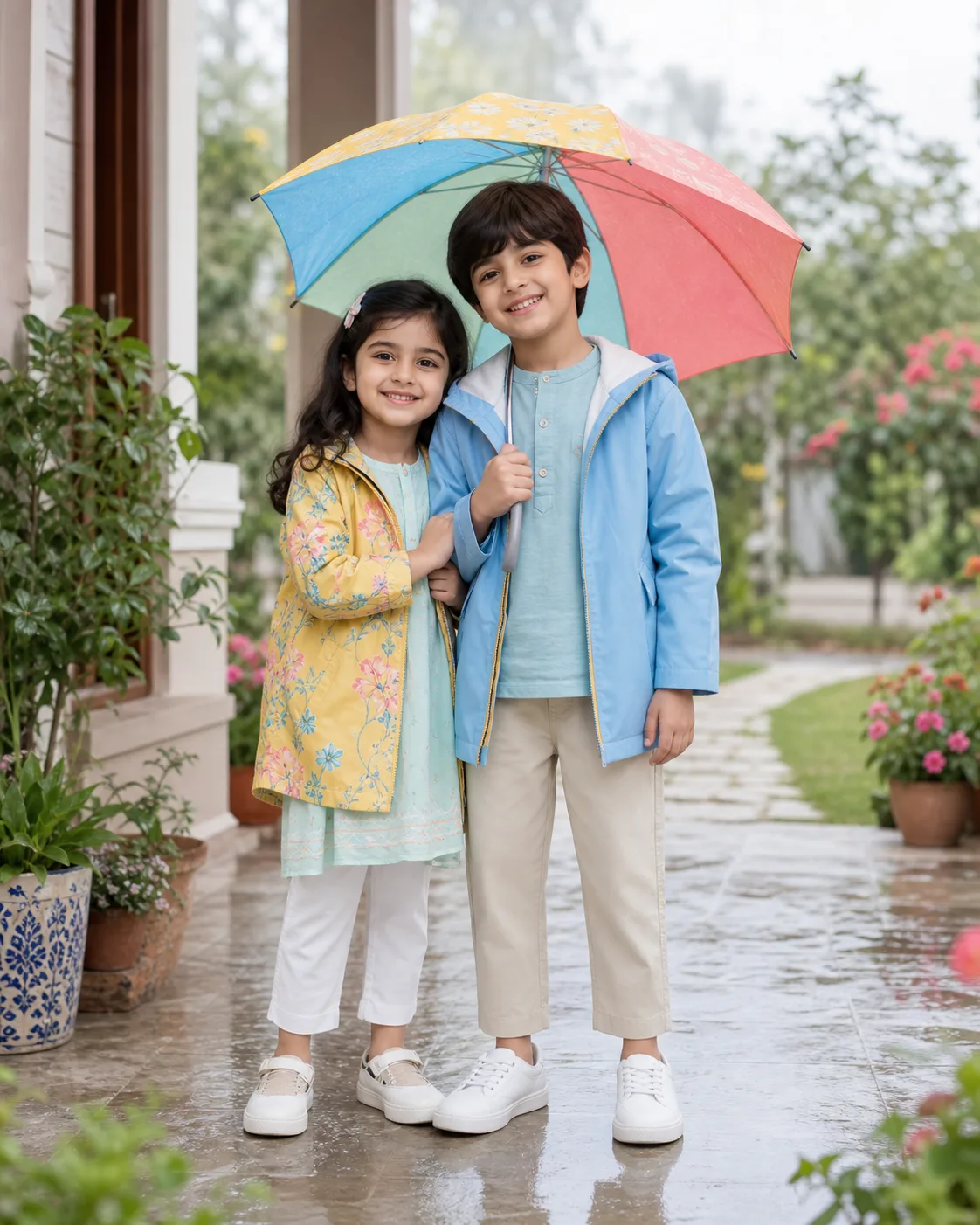
Kids monsoon clothing should handle two very different conditions at once: warm, humid air and sudden rain. The goal is not to make a child waterproof from head to toe. It is to keep everyday clothes comfortable, choose practical lengths and make wet-weather changes simple.
Choose a light base outfit
Start with a soft, lightweight outfit that the child can comfortably wear indoors. Heavy fabrics may take longer to feel dry after a splash, while bulky layers can feel uncomfortable when the air is warm. A simple shirt-and-bottom set, frock, tunic with leggings or romper gives you a flexible base.
Browse boys’ shirt-and-shorts sets, frocks and leggings for easy starting points.
Use an outer layer that can come off quickly
A light rain layer is most useful when it is easy to remove at the door. It should fit over the base outfit without pulling at the shoulders. Check that the hood, cuffs and closures are comfortable and that no long loose cord hangs near the neck.
Once indoors, remove a wet outer layer promptly and hang it where air can circulate. Leaving it on can make the child feel clammy even if the clothes underneath stayed mostly dry.
Keep hems away from puddles
Full-length trousers and long flowing dresses can soak up water from the ground. For rainy outings, cropped trousers, properly fitted leggings or hems that sit clearly above the shoe are easier to manage. Avoid rolling a thick cuff that stays wet for hours.
Pick footwear for grip and drainage
Use footwear suited to the route and activity. A closed, secure shoe may help on a busy school run, while a washable sandal can suit a short casual trip. Whatever the style, check the sole for useful tread and make sure the shoe does not slip at the heel.
Change wet socks and shoes when possible. Let footwear dry fully in moving air before it is worn again. Do not place delicate materials directly against very high heat unless the maker’s instructions allow it.
Pack one small dry-change kit
A compact change kit can rescue a long day. Include:
- One lightweight top and bottom or a one-piece outfit
- Dry underwear and socks
- A small absorbent towel
- A reusable waterproof bag for wet clothing
Choose neutral or coordinated colours so the spare pieces work together without planning a second complete look.
Make school and nursery clothes easy to manage
For younger children, simple elastic waists and familiar fasteners make changes faster. Add the child’s name using the method allowed by the school or nursery, but keep any added label smooth and secure. Our back-to-school clothes checklist can help you build a dependable weekday rotation.
Wash splashes with the care label in mind
Muddy marks are easier to handle when you avoid rubbing them deeper into the fabric. Let thick mud dry, gently lift off the excess, then follow the garment’s care instructions. Treat colours, embroidery and trims cautiously. If you are unsure, test any stain treatment on a hidden area first.
For a fuller method, read how to remove stains from kids’ clothes.
Dry clothes completely before storing
Do not place damp clothes back in a drawer or crowded laundry basket. Give washed garments enough space and airflow to dry completely. If an item still smells damp after drying, wash it again according to its label before returning it to the wardrobe.
Monsoon outfit formulas that work
- School run: lightweight shirt, cropped trouser, secure shoes and removable rain layer
- Family visit: knee-length frock with leggings and a light outer layer
- Indoor play: soft tee with easy shorts or trousers
- Baby outing: comfortable romper, spare romper and light cover for transit
Frequently asked questions
Are synthetic fabrics always better in rain?
No. Fabric performance depends on the specific construction and finish. Some synthetics dry quickly, while some may feel less comfortable in humidity. Check the whole garment, its lining and care label.
Should children wear a raincoat all day?
A rain layer is for wet conditions and transit. Remove it indoors when it is no longer needed, especially if the child feels warm or clammy.
What is the most useful monsoon extra?
For many families, a complete lightweight change of clothes is more useful than several accessories. Keep it packed in a small waterproof bag.
Build your child’s rainy-day base wardrobe from comfortable everyday pieces in the WonderKids shop.

