


Blog
Winter Clothes for Kids in Pakistan: The Easy Layering Guide

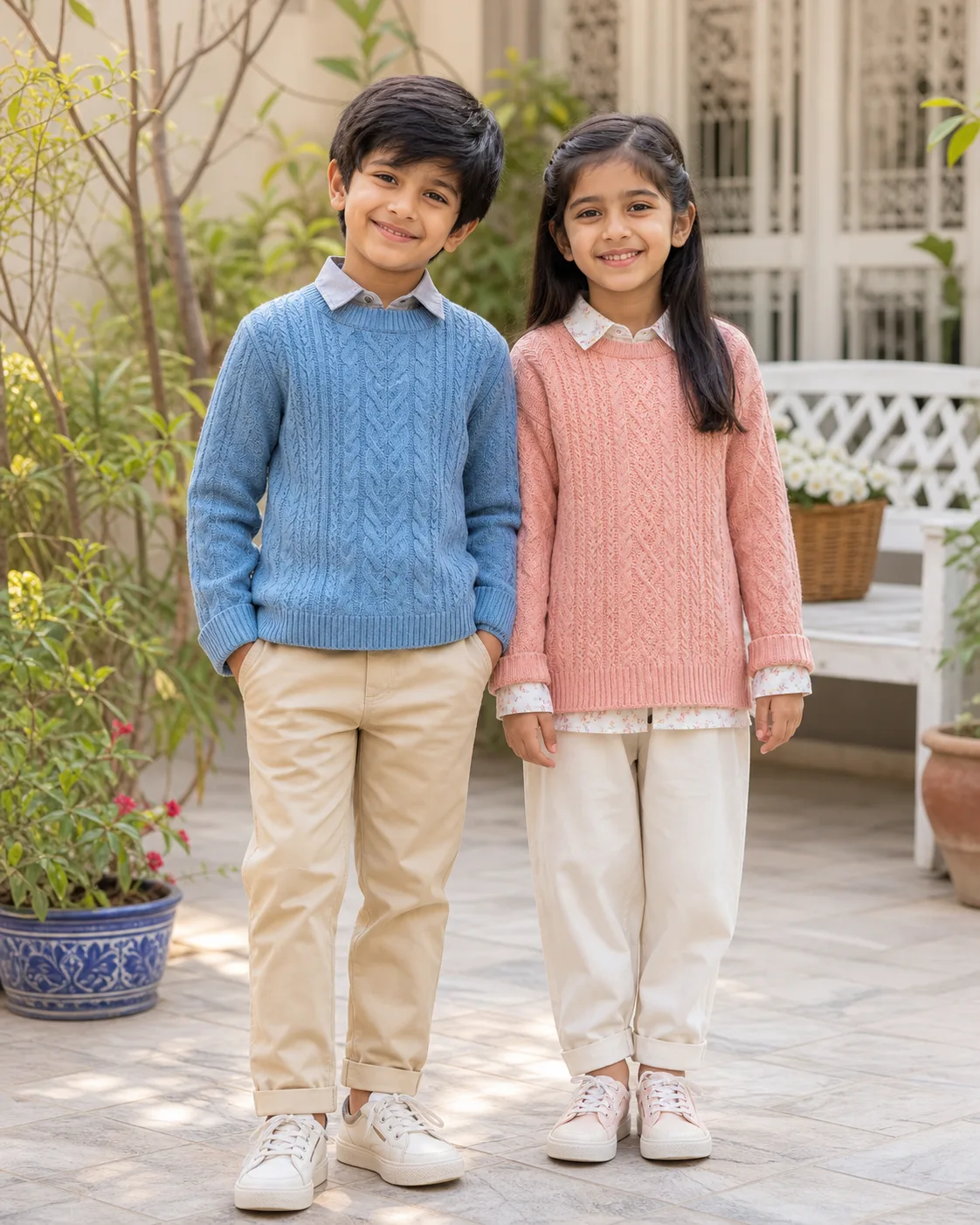
Winter clothes for kids in Pakistan work best as flexible layers. A chilly school morning may turn into a sunny afternoon, and a warm car or classroom can feel very different from the outdoors. Layering lets a parent or child adjust without replacing the entire outfit.
The simple three-layer system
Think of a winter outfit in three possible parts rather than one very heavy garment:
- Comfortable base: a soft shirt, tee, romper or other layer worn next to the skin.
- Warm middle: a cardigan, sweatshirt or light knit that traps some warmth but remains easy to remove.
- Weather layer: a jacket or coat for colder, windy or damp outdoor conditions.
Not every day needs all three. Choose the combination for the location, time of day and child’s activity.
Check comfort at each layer
A base layer that fits well may feel tight once a bulky knit is added. Dress the child in the complete combination and ask them to raise their arms, sit and reach forward. The neckline should not press, sleeves should not bunch painfully and the waistband should remain comfortable.
For a flexible middle layer, explore children’s knitwear and pair it with familiar basics already in the wardrobe.
Choose light layers for active children
Children generate heat while running and playing. Several manageable layers are easier to adjust than one heavy outfit. Teach an older child where to keep a removed cardigan or jacket so it does not get lost at school or during a family visit.
Use the “one more layer” rule thoughtfully for babies
The American Academy of Pediatrics gives a common rule of thumb: dress a baby in one more layer than an adult would wear to feel comfortable in the same environment. This is a starting point, not a reason to bundle a baby heavily. Check the baby’s chest or back rather than relying only on cool hands and feet, and remove a layer if the baby feels hot or sweaty.
For sleep, follow current safe-sleep advice and the instructions for any baby sleepwear or sleep bag. Daywear guidance should not be treated as sleepwear guidance.
Remove extra outerwear indoors
A warm car, bus, shop or home may make outdoor layers unnecessary. Take off hats and heavy outerwear after entering a warm space. This also prevents a child from becoming sweaty and then feeling cold when they go outside again.
Plan winter outfits around the day
- School morning: base top, comfortable trouser, cardigan and removable jacket
- Sunny afternoon: long-sleeve top with a light knit carried nearby
- Family event: festive outfit with a coordinated cardigan instead of a hidden bulky layer
- Baby outing: romper or base set, light middle layer and weather-appropriate cover
Check winter fasteners and cords
Inspect zips so they do not catch the child’s skin or inner clothing. Buttons and snaps should be secure. Avoid long loose cords around the neck or hood; they can catch during play. Read our complete kids’ clothing safety checklist before adding outerwear to the regular rotation.
Keep feet comfortable
Socks should fit without bunching, and shoes should still have enough room when worn with the intended sock thickness. If a winter shoe only fits with thin socks, adding a much thicker pair may create pressure rather than comfort.
Build a small coordinated winter rotation
Choose two or three middle layers that work with several tops and bottoms. A simple colour palette reduces morning decisions and makes it easier to replace one item after a spill. The kids’ capsule wardrobe plan shows how to create more combinations with fewer pieces.
Frequently asked questions
Is one heavy sweater better than two light layers?
It depends on the setting, but light layers are usually easier to adjust across changing temperatures. The child should still be able to move comfortably.
How can I tell whether a child is too warm?
Check the child’s chest or back and observe comfort. Sweating, unusual warmth or a request to remove clothing are signs to take a layer off. Seek medical advice if you are concerned about a baby’s temperature or wellbeing.
Should I size up a coat for growth?
A little growing room can be useful, but the coat should not swamp the child, cover the hands completely or interfere with walking and play. Test it over the normal winter layers.
Explore WonderKids styles and build winter outfits that can change with the day.

