


Blog
Kids’ Clothing Safety Checklist: 10 Checks for Parents

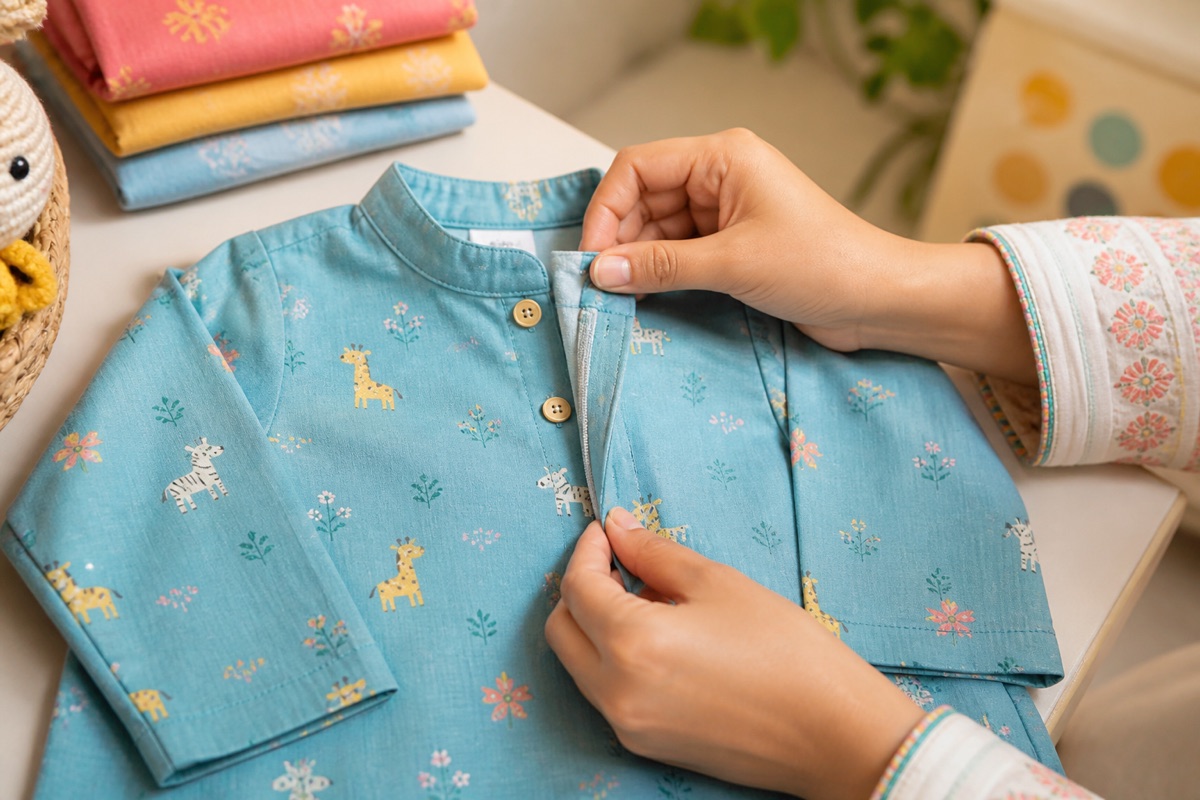
A practical kids clothing safety checklist looks beyond colour and style. Before a new or handed-down garment enters daily rotation, check its fit, fastenings, cords, trims, fabric condition and care information. Repeat the check after washing because wear can loosen parts that were secure when purchased.
This parent guide covers general clothing checks, not product certification or medical advice. Follow the manufacturer’s age guidance and local safety requirements.
1. Check the fit during real movement
Ask the child to sit, walk, raise both arms and bend comfortably. A neckline should not press the throat, armholes should not rub and trousers should not restrict a squat. Avoid hems that trail under shoes. Clothes that are extremely oversized can catch on play equipment, while tight waistbands and stiff seams may make a child reluctant to move.
2. Avoid hazardous neck and hood cords
Long drawstrings and toggles can catch on slides, doors and other equipment. The U.S. Consumer Product Safety Commission identifies hood and neck drawstrings on children’s upper outerwear as a strangulation hazard and provides detailed drawstring safety guidance. For everyday buying, choose child outerwear without loose cords around the head and neck, and inspect waist cords for long free ends or bulky attachments.
3. Tug-test buttons, snaps and decorations
Gently check every button, bead, bow, sequin, badge and snap. Stop using the garment if a small part is loose, especially for a baby or young child who mouths objects. Repair it securely or remove the garment from use. Decorative items should not have sharp corners or rough backs that contact skin.
4. Examine zips and fasteners
Run zips slowly and confirm that a fabric guard prevents pinching near the chin or body. Hook-and-loop tape should close flat without exposed scratchy edges. Snaps should align without requiring enough force to tear the surrounding fabric. Replace a garment if broken metal, sharp teeth or cracked fasteners cannot be safely repaired.
5. Feel every inside seam
Turn the garment inside out. Look for broken elastic, stiff labels, exposed thread ends, rough embroidery backing and seam allowances that may rub. For babies, inspect feet, mitts and toes for loose threads that could wrap around a finger or toe. Remove the item from use until the problem is fixed.
6. Choose sleepwear deliberately
Use garments sold and labelled for children’s sleep rather than assuming any loose T-shirt or costume is suitable. Follow the garment’s fit, age and care directions, and keep sleepwear away from heaters, candles and cooking flames. Do not add decorative cords, capes or loose accessories for sleep.
7. Match clothing to the activity
- Playgrounds: avoid scarves, dangling straps and garments that can snag.
- Cycling or skating: keep wide hems and cords away from wheels and chains; clothing must not interfere with correctly fitted safety equipment.
- School: check that bags, ID lanyards and uniform accessories follow school rules.
- Cooking or crafts: secure loose sleeves and keep flammable or dangling fabric away from heat.
- Hot outdoor play: use breathable coverage, a hat and shade; see our sun-protective clothing guide.
8. Inspect second-hand clothes carefully
Hand-me-downs can be economical and sustainable, but age and repeated washing may weaken elastic, seams and fasteners. Check for recalls where a reliable product identifier is available. Remove old pins, magnets, drawstrings or damaged decoration, and wash according to the label before use. If the garment’s origin or purpose is uncertain, do not use it as sleepwear or protective clothing.
9. Recheck after every repair
A repair should restore strength without adding a new hazard. Use matching, secure fasteners; trim thread ends; and make sure patches do not create stiff rubbing edges. Tug-test the repair before the child wears it. Complex zip, snap or structural repairs may need a professional tailor.
10. Teach children to report discomfort
Ask children to tell you when something scratches, pinches, feels too tight or catches during play. Take the complaint seriously even if the garment looks fine. A simple body-and-movement check can reveal a hidden label, damaged seam or outgrown fit.
A 60-second check before dressing
- right size and free movement;
- no long neck cords or dangerous dangling parts;
- buttons and trims firmly attached;
- zips smooth and guarded;
- no sharp, broken or rough areas;
- appropriate for the activity and weather; and
- care label still readable or photographed.
Frequently asked questions
Are all decorative buttons unsafe?
No, but they must be age-appropriate and firmly attached. Loose small parts are a reason to stop using the garment until repaired.
How often should I repeat the checklist?
Check new and handed-down clothes before first use, then scan fasteners and seams during laundry. Do a fuller review when the child grows or the season changes.
What matters most when buying for a baby?
Comfortable fit, smooth seams, secure fasteners and easy access for changing. Our baby romper guide explains these details.
Safe clothing is not complicated: choose a suitable garment, inspect it closely and remove it from use when damage creates doubt.

