


Blog
How to Measure Kids for Clothes at Home in 6 Steps

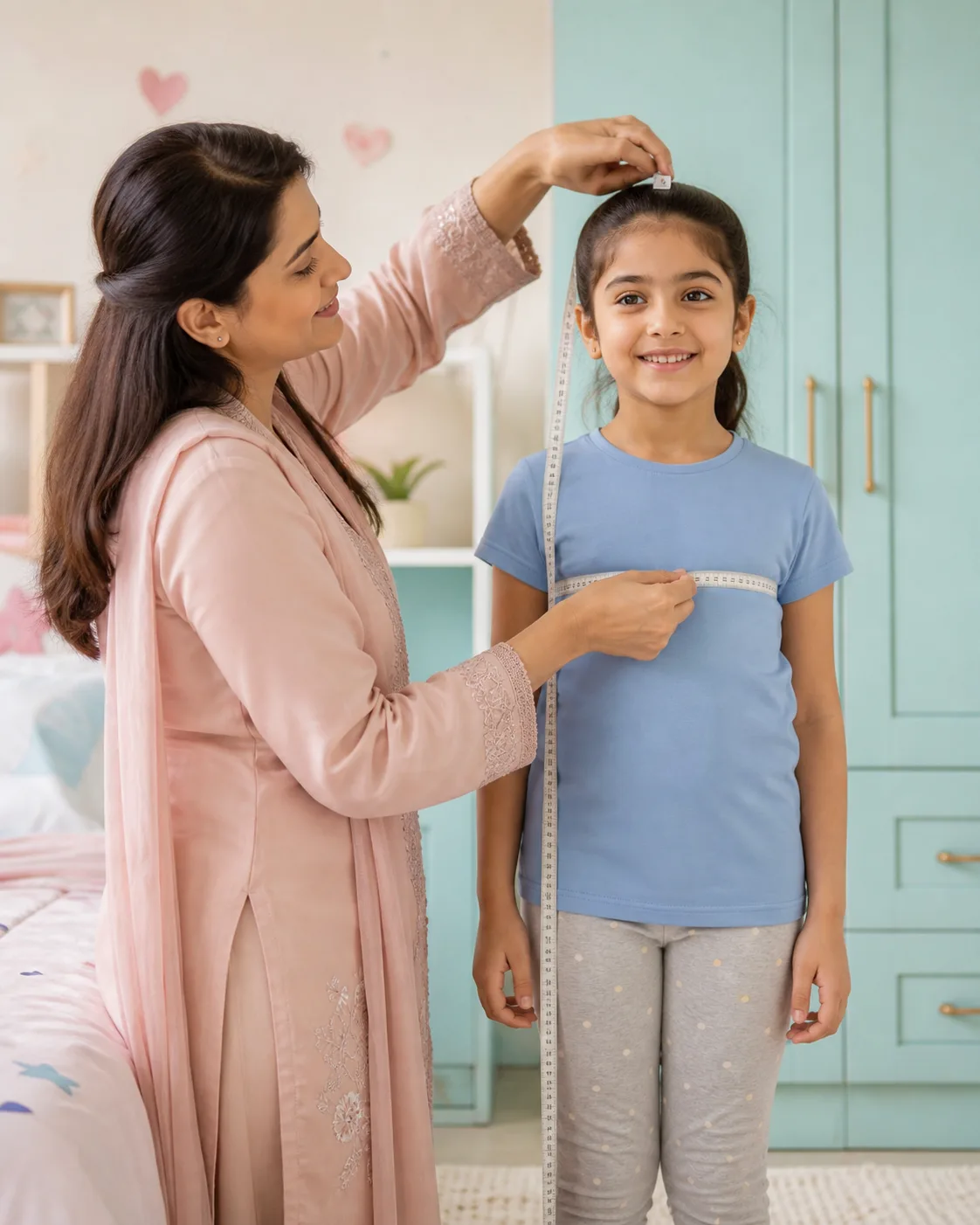
Learning how to measure kids for clothes can make online and in-store shopping much easier. Age labels are not universal, and children of the same age can have very different proportions. A soft tape, a few calm minutes and six clear measurements give you better information.
Before you start
- Use a flexible measuring tape.
- Dress the child in light, fitted clothing—not bulky layers.
- Ask the child to stand naturally, without holding their breath.
- Keep the tape level and comfortably close, not tight.
- Write each number down immediately in centimetres or inches.
If the child is tired or restless, pause and try later. A rushed measurement is less useful than a calm one.
1. Measure height
Have the child stand barefoot against a flat wall with feet together and looking straight ahead. Place a flat book or ruler level on the head and mark the wall lightly. Measure from the floor to the mark.
Height is often the most useful starting point for children’s sizing, especially when comparing full-body garments.
2. Measure the chest
Wrap the tape around the fullest part of the chest, under the arms and across the shoulder blades. Keep it level around the body. The child should breathe normally, and the tape should not compress the chest.
3. Measure the natural waist
Find the natural waist by asking the child to bend gently to one side; the crease shows the approximate point. Wrap the tape around that level. Do not measure over a thick waistband.
4. Measure the hips
Place the tape around the fullest part of the hips and seat, keeping it level. This can be useful for trousers, jeans, skirts and fitted dresses.
5. Measure the inseam
For trousers, measure from the crotch seam area down the inside leg to the intended hem point. It can be easier to measure a well-fitting pair of trousers laid flat: start at the crotch seam and follow the inside leg to the hem.
6. Measure garment length
For a frock or tunic, measure from the high shoulder point near the neck down to the desired hem. For a top, use the same starting point and stop at the preferred length. Compare this with the product’s garment length where available.
Useful extra measurements
Some products may also call for shoulder width, sleeve length, rise or foot length. Measure only what the product chart uses. For sleeves, start at the shoulder point and follow the arm to the wrist with a gentle bend at the elbow.
Compare the numbers with the specific chart
Do not carry one size label from brand to brand without checking. Compare the child’s body measurements with the chart for the exact item. Also confirm whether the chart lists body measurements or finished garment measurements; they are not the same.
If a child falls between sizes, consider the garment shape and the most important measurement. Chest may lead for a shirt, hip or waist for trousers, and torso length for a romper. Contact the seller when the chart is unclear.
Measure a favourite garment for comparison
Lay a comfortable garment flat without stretching it. Measure width across the chest, waist, length, sleeve and inseam as relevant. Compare like with like: a stretchy tee will not match a structured shirt in the same way.
How much growing room is enough?
A little ease is useful, but very oversized clothing can create slipping shoulders, long hems and difficult movement. Look at the cut, not only the size. Adjustable waists, stretch cuffs and a slightly longer hem can provide practical room without swamping the child.
Keep a simple measurement note
Save the date and measurements in your phone. Children grow, so refresh the note before a new season, school term or occasion purchase rather than relying on an old record.
Common measuring mistakes
- Measuring over a sweater or jacket
- Pulling the tape tight
- Letting the tape slope at the back
- Using an old measurement without a date
- Confusing body and garment measurements
- Choosing by age alone
Frequently asked questions
Should I measure in centimetres or inches?
Use the unit shown in the product chart. If both are available, record both or convert carefully and keep the original number.
What if my child is between sizes?
Check the garment shape and the measurement most important to that item. Then consider whether the fabric stretches and whether adjustable features are provided.
How often should I measure my child?
Measure before a major seasonal shop, school purchase or occasion order, and whenever current clothes show a clear fit change.
Once you have fresh numbers, use our online kids’ clothes shopping checklist and browse the WonderKids shop with more confidence.

