


Blog
Best Fabric for Kids’ Clothes: Cotton, Blends, Knit and Denim

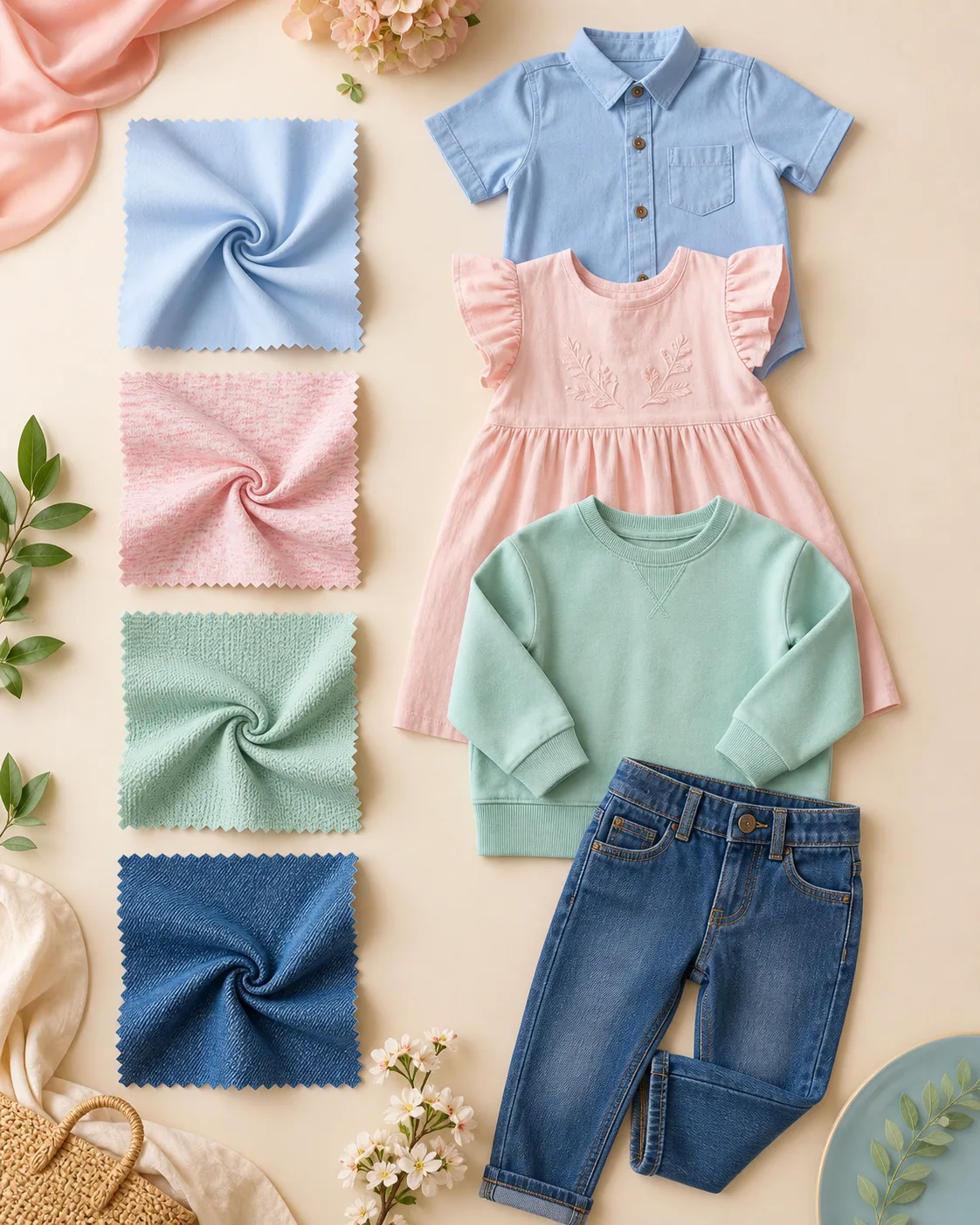
The best fabric for kids clothes depends on the weather, activity, garment construction and your care routine. Fibre names are helpful, but they do not tell the whole story. Weight, weave or knit, lining, stretch, seams and finishing all change how a finished garment feels.
Cotton: familiar and versatile
Cotton is widely used for children’s shirts, frocks, rompers and everyday sets. It can feel soft and comfortable, but cotton fabrics vary greatly. A light cotton lawn, jersey knit and heavy cotton drill do not perform the same way.
Useful for: everyday tops, warm-weather pieces, rompers and many casual outfits.
Check: fabric weight, colourfastness instructions, lining, shrinkage guidance and whether decoration changes the feel.
Cotton blends: a balance of properties
Blending cotton with another fibre can change stretch, crease recovery, drying time or durability. The exact percentages matter. A blend is not automatically better or worse than pure cotton; judge the complete garment and read the label.
Useful for: school-day pieces, easy-care sets and garments that need some shape retention.
Check: fibre percentages, feel against the skin and care temperature.
Stretch knit: movement-friendly
Knit fabrics can stretch because of their looped construction, and some also include an elastic fibre. They are common in tees, leggings and soft trousers. Good recovery helps a garment return toward its shape after stretching.
Useful for: leggings, tees, rompers and active everyday clothing.
Check: opacity in movement, waistband comfort, knee recovery and the label’s heat instructions.
Denim: durable structure with different weights
Denim ranges from light and soft to heavy and rigid. Stretch denim may feel easier during active movement, while a relaxed cut can make a structured denim comfortable without much stretch.
Useful for: jeans, overshirts, skirts and durable casual pieces.
Check: inner seams, rivets, fasteners, colour-care directions and the sitting fit.
Read the detailed kids’ jeans guide before choosing denim bottoms.
Light knitwear: removable warmth
Cardigans and pullovers add flexible warmth. Natural and synthetic fibres, or blends of both, can be used. Focus on softness, recovery, seam comfort and the care method rather than assuming every knit behaves alike.
Useful for: cool mornings, winter layering and air-conditioned spaces.
Check: pilling, snagging, neck stretch and whether the item must dry flat.
Lining and trim can change everything
A soft outer fabric may still feel uncomfortable if the lining is stiff or embroidery backing rubs. Turn the garment inside out. Inspect underarms, necklines, waist seams and cuffs. For babies and toddlers, check that all trims and fasteners are secure.
Choose fabric by use, not by trend
- Hot everyday wear: light, comfortable construction with an easy fit
- Active play: fabric and seams that support movement
- School rotation: care instructions that suit frequent washing
- Occasion wear: comfortable lining and manageable embellishment
- Cool weather: layers that can be added and removed
Read both the fibre and care labels
The fibre label tells you what the textile contains. The care label tells you how the finished garment should be washed, dried, ironed or professionally cleaned. Follow the instructions for the finished piece, because trims, dyes and linings also matter.
Use our parent-friendly guide to clothing care symbols when a label seems confusing.
A fabric shopping checklist
- Feel the inside and outside.
- Check weight and movement.
- Read the fibre percentages.
- Inspect lining, seams and decoration.
- Review washing, drying and ironing instructions.
- Decide whether that care fits real family life.
Frequently asked questions
Is 100% cotton always better for children?
No fabric is best for every garment. Cotton can be excellent, but construction, weight, fit and care also matter. Some blends are useful for stretch, shape or easy care.
What fabric is best for leggings?
Look for a comfortable knit with suitable stretch, recovery and coverage. Check the waistband and opacity while the child moves.
What should I choose for a child with sensitive skin?
Choose soft-feeling garments with smooth seams and minimal rough trim. Individual skin conditions differ, so ask a qualified clinician for personal medical advice.
Compare fabrics and fits across the WonderKids collection, and let the garment’s complete construction guide your choice.

