


Blog
Kids’ Capsule Wardrobe: A Simple Mix-and-Match Plan

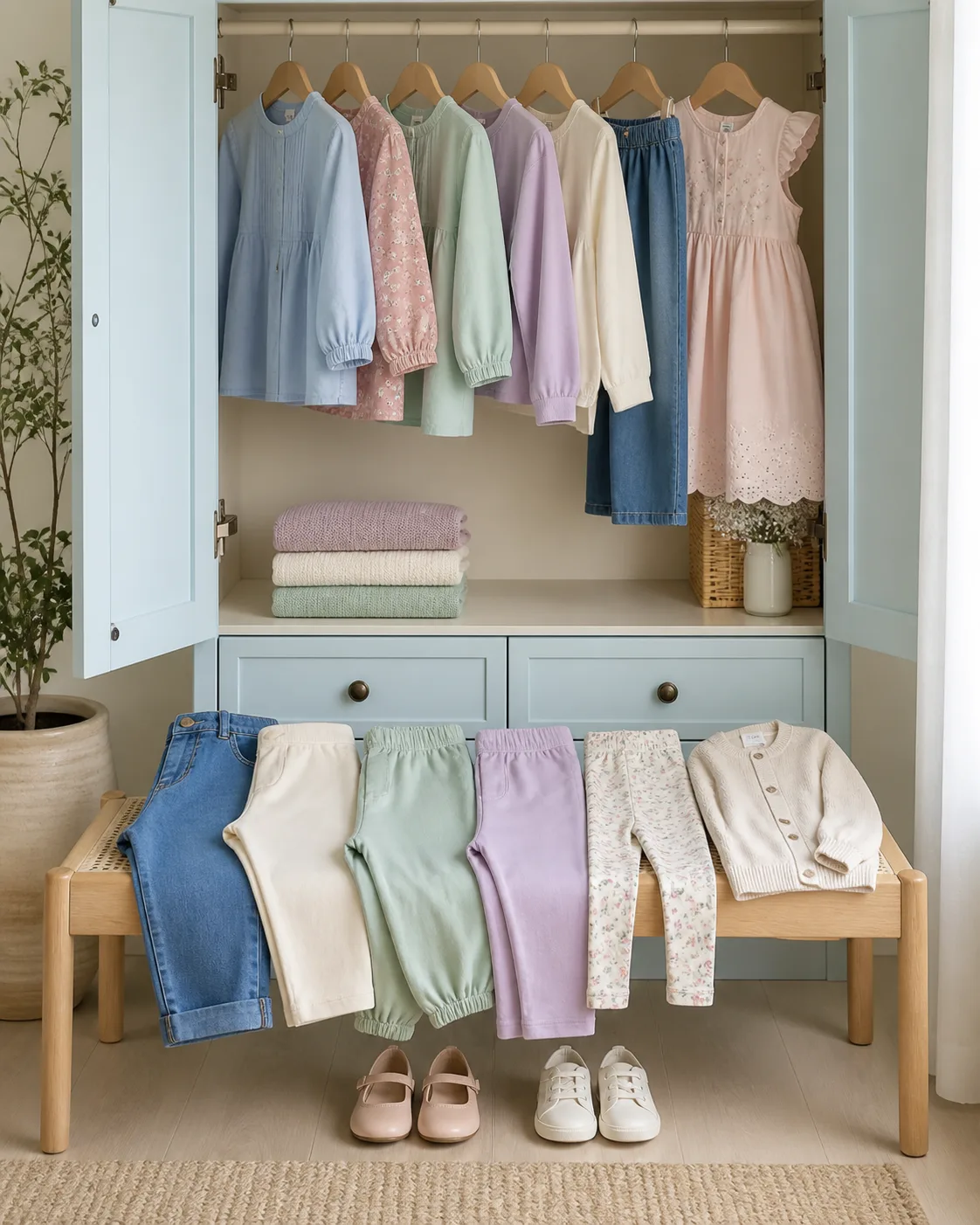
A kids capsule wardrobe is a small group of clothes that mix easily and cover the child’s real routine. It is not a strict minimalist challenge and it does not require an exact number of pieces. The goal is fewer wardrobe gaps, faster mornings and more use from each item.
Start with one ordinary week
Write down what the child actually does: school, nursery, home play, tuition, family visits, sports and one occasional event. Then note the laundry schedule and local weather. This prevents buying a capsule designed for an imagined lifestyle.
Choose a simple colour palette
Use two or three base colours and one or two accents. For example:
- Denim blue, cream, mint and blush
- Navy, warm white, sky blue and coral
- Lavender, grey, cream and soft pink
The palette is a guide, not a ban. A favourite bright print can still belong when it works with at least two other pieces.
Build around dependable categories
A flexible capsule may include:
- Everyday tops
- Comfortable bottoms
- One or two one-piece outfits such as frocks or rompers
- One removable warm layer
- Weather-appropriate outerwear
- One occasion-ready combination
The quantities depend on wash frequency and the child’s age. A toddler who needs changes may require more base pieces than an older child.
Use the three-outfit test
Before buying a separate, imagine three outfits using pieces already owned. A top that works with jeans, leggings and a skirt earns its space more easily than one that matches only a single bottom.
Keep successful outfit formulas
Capsules become easy when you repeat comfortable shapes:
- Tee plus jeans or soft trousers
- Tunic plus leggings
- Frock plus optional cardigan
- Shirt-and-shorts set worn together or separately
- Romper plus removable layer for a baby
Explore leggings, jeans, frocks and rompers as building blocks.
Leave room for personality
A capsule should not erase the child’s preferences. Let them choose a favourite colour, print or special piece within the coordinated plan. Children are more likely to wear clothes they enjoy.
Separate current, next-size and occasion clothes
Only current everyday pieces belong in the active capsule. Store next-size items elsewhere so they do not crowd the drawer. Keep delicate occasion wear in its own section. Our guide on how to organize kids’ clothes shows a simple system.
Review the capsule by season
At a seasonal change, remove outgrown pieces, inspect repairs and add only the missing categories. Do not rebuild from zero if most tops and bottoms still work.
Choose care-friendly pieces
When a small wardrobe is worn often, laundry compatibility matters. Read labels and avoid making every everyday piece a special-care item. Keep one backup outfit available while the regular rotation is being washed.
A flexible starter plan
Use this as a planning shape, then change quantities for your family:
- Several everyday tops covering the gap between wash days
- Enough bottoms to create a clean daily combination
- One or two complete one-piece outfits
- One light layer and one weather layer as needed
- One comfortable occasion outfit
- One complete emergency spare
Frequently asked questions
How many items are in a kids capsule wardrobe?
There is no ideal universal number. Count days between washes, changes needed, school requirements and weather. The right capsule is the smallest rotation that remains reliable.
Does every piece need to match everything?
No. Aim for several useful combinations. A special frock or statement print can belong even if it has fewer pairings.
What should I buy first?
List the current clothes, build outfits on the bed and identify the missing category. Often one versatile bottom or layer unlocks more outfits than several new tops.
Fill genuine wardrobe gaps from the WonderKids shop instead of buying disconnected pieces.

