


Blog
How to Organize Kids’ Clothes by Size, Season and Use

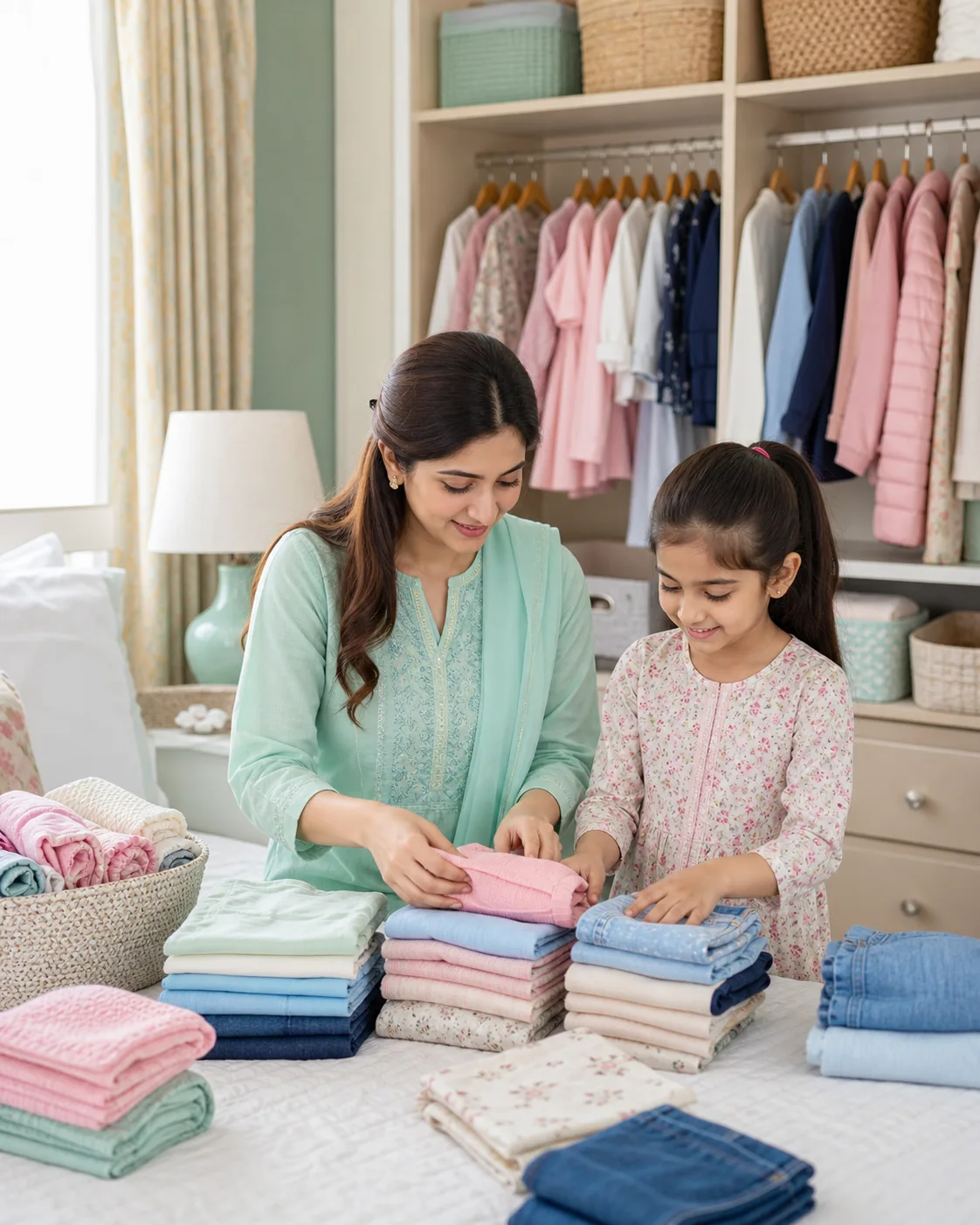
To organize kids clothes well, separate what fits now from what belongs to another size, season or child. A clear system makes mornings faster and prevents useful pieces from being forgotten at the back of a crowded wardrobe.
Empty one small section at a time
Do not begin by covering the whole room with clothes. Start with one drawer, shelf or rail. Finish that section before moving on. This keeps the task manageable and gives you a working space.
Create five simple groups
- Fits now: comfortable and ready for the current season.
- Next size: useful later, but not mixed into daily choices.
- Different season: still fits or likely to fit when needed.
- Repair or stain treatment: temporarily out of rotation.
- Outgrown: ready to pass on, donate, sell or recycle as appropriate.
Check fit before keeping an uncertain item
If you cannot remember whether something fits, use a quick try-on rather than guessing. Ask the child to sit, raise their arms and walk. Measure uncertain pieces against a comfortable garment. Keep our kids’ measuring guide nearby.
Organize the active wardrobe by outfit logic
Place everyday tops together, bottoms together and complete sets where both pieces can be found. Keep school clothes in one clear section. Store occasional pieces separately so delicate trims do not catch on everyday items.
Make the child’s most-used items reachable
For a child old enough to dress independently, place safe everyday clothes at a comfortable height. Keep heavy boxes and hanging organizers securely positioned. Adults should manage high storage and delicate or special items.
Fold so the contents stay visible
File-fold tees and leggings when drawer depth allows, or create short stacks that do not collapse. Avoid piles so high that the bottom item disappears for a season.
Keep the next size in a labelled container
Use a clear label with size range and season. Add a note on your phone to review the container at the start of the relevant season. Do not overfill it with items that repeat the same category.
Store only clean, fully dry clothes
Wash according to the care label and let garments dry completely before long storage. Fasten zips, leave elastic relaxed and avoid trapping a hidden stain that becomes harder to treat later.
Create a repair basket with a deadline
Keep loose buttons, small tears and missing fasteners out of the active wardrobe. Review the repair basket weekly. If an item cannot be repaired safely or realistically, make a clear decision rather than letting it occupy space indefinitely.
Use a one-in, one-check habit
Each time a new piece enters, check the category it joins. A new pair of jeans may reveal an older pair that is now too short. This habit prevents wardrobe growth from hiding fit changes.
Build ready outfit combinations
Hang a top and bottom together for school mornings, or place a complete spare in a labelled bag. A coordinated kids’ capsule wardrobe makes these combinations easier.
A 15-minute monthly reset
- Return clean clothes to the right category.
- Move damaged items to the repair basket.
- Check one fast-growing category such as trousers or shoes.
- Remove anything clearly outgrown.
- Note one genuine wardrobe gap.
Frequently asked questions
Should I organize by size or type?
Separate current and future sizes first. Within the current size, organize by type or routine—school, everyday, occasion—whichever makes mornings easier.
How should I store clothes for a younger sibling?
Keep only clean, wearable pieces in labelled containers by size and season. Remove damaged items and note anything with special care needs.
What belongs in the active wardrobe?
Clothes that fit now, suit the current season and are ready to wear. Next-size, repair and special-season items should have separate homes.
Once the wardrobe is clear, fill only the real gaps from the WonderKids collection.

